They Said They Were Going in Another Direction: What That Really Means Legally

They said they were going in another direction. Learn what that vague termination phrase really means legally, how to read it, and how to protect your rights.
By C3H Global Editorial | Published June 24, 2026 | 15 min read
You were doing your job. Maybe you were doing it well. Then a meeting appeared on your calendar with no agenda, a manager you barely spoke to was sitting in the room, and somebody said the company had decided to go in another direction. No real reason came with it. No clear explanation. Just a soft phrase that closed your career like a door and left you standing in your own kitchen, replaying a moment you never saw coming. If that is where you are right now, you are not imagining things, and you are not overreacting.
That phrase was built to feel final and harmless at the same time. It sounds polite. It sounds like nobody did anything wrong. And that is exactly why it lands so hard, because it hands you nothing to push against and nothing to understand. So you go back through the last few weeks hunting for the mistake you must have made, when the truth is that there often was no mistake at all. What there was, more often than people realize, is a decision the company would rather not put into plain words.
This article exists to give you those words back.
Key Takeaways
- The phrase "going in another direction" carries no legal meaning on its own. It is conversational language rather than a legal justification, and it neither protects the employer nor strips you of a single right.
- Most employees in the United States work at will, which means they can be let go for almost any reason or for no reason. The one exception that matters is that they cannot be let go for an illegal reason.
- A vague reason turns legally important when it starts working as a cover story for an illegal motive. Courts call that cover story pretext, and proving pretext is often how wrongful termination and discrimination cases are won.
- What you do in the first few days matters more than anything you say in the meeting. Preserve your documents, write down what happened, and hold off on signing anything.
- Federal laws including Title VII of the Civil Rights Act, the Age Discrimination in Employment Act, and the Americans with Disabilities Act limit what an employer is allowed to do, no matter how gently the termination is phrased.
What "Going in Another Direction" Actually Means
Going in another direction is a conversational phrase employers use to end someone's job without naming the reason behind it. It is not a legal term, and it carries no real weight on its own. Companies reach for it precisely because it sounds neutral, sidesteps any accusation, and leaves the person walking out the door with almost nothing to question.
Definition box. "Going in another direction" is informal language an employer uses to deliver a termination while withholding the actual reason for it. The phrase has no legal definition and creates no legal protection for the employer. Its only real job is to soften and obscure.
Employers lean on vague language for a handful of practical reasons, and not all of them are sinister. Some managers simply hate confrontation. Others want to avoid a fight over performance they could never fully document. In plenty of cases, leadership is quietly restructuring and would rather not admit the budget no longer covers your role. And then there are the times the vagueness is doing much heavier lifting, hiding a reason the company knows it cannot say out loud, because saying it would amount to evidence of something illegal.
On its own, the phrase tells you almost nothing. What actually matters is the pattern of facts sitting around it.
Why does an employer avoid giving a real reason?
An employer avoids giving a real reason because specifics create accountability, and accountability creates legal exposure. A detailed reason can be challenged, checked against the record, and contradicted by your own documents. A vague phrase offers nothing to argue with, which is exactly why a company worried about a future claim will often choose the blurriest language it can find.
The strategy can backfire. When a business gives no reason at first and then manufactures one once a dispute begins, that very shift can read as suspicious to a court. We will come back to why that matters when we reach pretext.
At Will Employment: The Rule, and the Limits Most People Never Hear About
At will employment means an employer can end your job for almost any reason, for no reason, or even for an unfair reason, but never for an illegal one. This is the default working relationship in every state except Montana. Most people only ever absorb the first half of that sentence, and the missing half is where their power actually lives.
They hear that employment is at will, conclude the company can do whatever it likes, and quietly accept that they have no rights worth checking. That conclusion is wrong, and it is the single biggest reason strong cases never get a second look.
What does at will employment actually mean?
At will employment means either side can end the relationship at any time, with or without cause, and with or without notice. You are free to quit whenever you choose, and the employer is free to let you go for most reasons. A phrase like going in another direction sits comfortably inside that arrangement, since the company usually does not owe you an explanation to begin with.
Here is the part that changes everything. Being at will does not hand an employer the right to break the law. Firing someone without a reason is not remotely the same as firing them for a forbidden one.
What are the limits on at will employment?
The limits on at will employment are the specific categories of firing that federal and state law flatly prohibit. An employer cannot push you out because of a protected trait, in retaliation for a protected action, or in breach of a contract or clear public policy. Those limits hold firm even when the company never states its real reason and tucks itself behind neutral language.
The major federal limits include:
- Title VII of the Civil Rights Act of 1964. Prohibits termination based on race, color, religion, sex, or national origin. Sex here includes pregnancy, sexual orientation, and gender identity.
- The Age Discrimination in Employment Act, known as the ADEA. Protects workers who are 40 and older from termination based on age.
- The Americans with Disabilities Act, known as the ADA. Prohibits termination based on a disability and requires reasonable accommodation in many situations.
- The Family and Medical Leave Act, known as the FMLA. Protects eligible employees who take qualifying medical or family leave from being fired for taking it.
- Anti retaliation protections written into these same statutes and others, which shield you from being fired for reporting discrimination, filing a complaint, or taking part in an investigation.
- Contract and public policy exceptions recognized in most states, which can protect you when a termination breaks an employment contract or violates a clear public policy, such as firing you for refusing to commit an illegal act.
A soft phrase erases none of these protections. More often than not, the reason a company hides behind gentle wording is that the honest reason would fall squarely inside one of these forbidden categories.
When a Vague Reason Becomes Legal Evidence
A vague termination reason becomes legally significant the moment it starts working as a cover story for an illegal motive, something the law calls pretext. Pretext matters enormously to anyone who suspects their firing was not what it looked like, because discrimination is almost never announced. It is disguised.
Companies rarely state the real reason aloud when that reason is illegal. No competent employer tells you outright that you were let go over your age, your pregnancy, your race, or the harassment complaint you filed last month. They say they are going in another direction instead. The whole legal question becomes whether that tidy phrase is the truth or a mask.
What is pretext in an employment case?
Pretext is a false or misleading reason an employer offers to hide the true, illegal one behind a termination. Once an employee can show that the stated reason does not hold up, and that the real driver was discrimination or retaliation, the vague explanation flips. It stops being protection and turns into evidence.
Courts read pretext through patterns and contradictions rather than through the phrase itself. A few of the signals that pull a vague termination toward a finding of pretext:
- Timing. You were fired shortly after you disclosed a pregnancy, requested medical leave, reported misconduct, or filed a complaint.
- Shifting explanations. The company gave no reason at first, offered a performance reason later, then changed it again once you challenged it.
- Inconsistent treatment. Other employees who did the same things you did, or worse, kept their jobs while you did not.
- A clean record that suddenly turned. Your reviews were strong right up until the moment you became inconvenient or exercised a protected right.
- Comments that slip through. Remarks about your age, your accent, your family plans, or your health, even when someone frames them as jokes.
No single item proves a case on its own. Stacked together, though, they can turn we are going in another direction from a polite goodbye into the first thread of a wrongful termination or discrimination claim.
Can you sue if you were only given a vague reason?
You can pursue a claim when the real reason behind the vague wording falls into a legally protected category, even if the employer never admits it. The vagueness does not shut your case down. Quite often it does the opposite, because the gap between what they said and what the facts show is precisely what a court examines when it weighs pretext.
This is where the conversation turns from how you feel to what you can actually do. You are not powerless here. The same silence that felt like a wall can be rebuilt into a record that works in your favor.
Your Questions About Vague Terminations, Answered
This section answers the questions people most often carry after a termination they never understood, in plain language and without legal jargon.
Does "going in another direction" mean I did something wrong? No. The phrase is deliberately neutral and gets used all the time in situations where the employee did nothing wrong at all. It frequently signals restructuring, budget decisions, internal politics, or a reason the company simply prefers not to state. Read it as information about the company, not a verdict on you.
Is my employer required to give me a reason for firing me? In most cases, no. Under at will employment, an employer generally does not have to provide a reason. The legal issue is never whether they gave one. It is whether the actual reason, stated or hidden, was illegal.
If I am at will, do I have any rights at all? Yes, and more than you think. At will status does not strip away your protection against discrimination, retaliation, or other illegal terminations under Title VII, the ADEA, the ADA, the FMLA, and related laws. At will limits why you can be fired far more than most people ever realize.
Should I argue or demand answers in the termination meeting? Generally no. The meeting is rarely where anything gets won, and raw emotion in the moment can work against you later. Stay calm, listen closely, take mental notes, and do your real work afterward by documenting everything and seeking guidance.
What to Do in the First Days After a Vague Termination
The most valuable thing you can do after a vague termination is preserve evidence and avoid rushing into anything you cannot take back. The choices you make in the first few days, especially around signing documents or deleting accounts, quietly shape every option available to you later. This is the part you control, and it carries far more weight than the meeting that just blindsided you.
Work through this framework in order:
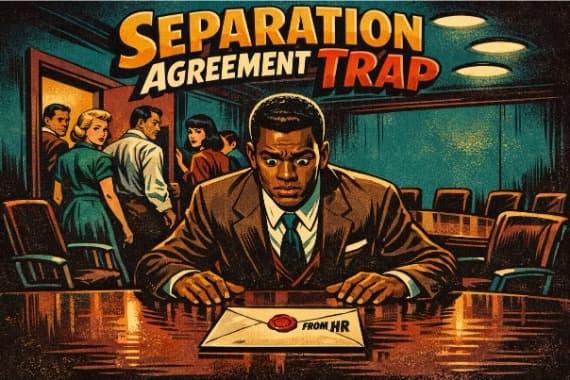
- Do not sign anything immediately. If someone hands you a separation agreement or a release, you are almost never required to sign it on the spot. Signing can waive rights you do not yet understand. Ask for a copy and time to review it.
- Write down what happened while it is fresh. Capture the date, who was in the room, what was said, the exact phrase used, and anything notable in the days before. Memory fades fast, and details decide cases.
- Preserve your records before access disappears. Save performance reviews, emails, messages, offer letters, and any record of complaints you made or praise you received. Keep personal copies rather than relying on company systems you may lose access to. Never take anything you are not legally entitled to, and steer clear of confidential company data that is not yours.
- Map the timeline of any protected activity. If you recently disclosed a pregnancy, requested an accommodation, took leave, reported misconduct, or filed a complaint, write those dates down beside the date you were fired. Timing is often the backbone of a retaliation claim.
- Track your deadlines. Many claims come with strict filing windows. A charge with the Equal Employment Opportunity Commission, known as the EEOC, generally has to be filed within 180 days of the discriminatory act, stretched to 300 days in many states. Waiting can quietly close the door on a strong case.
- Get informed before you decide anything. A conversation with a licensed employment attorney in your state, often a free consultation, is the fastest way to learn whether your situation carries real legal weight. You are gathering information, not committing to a lawsuit.
You do not need to solve all of this in a single afternoon. You only need to protect your options long enough to think with a clear head. That is the entire point of these first few days.
How to Tell a Legitimate Layoff From a Cover Story
A legitimate restructuring tends to follow a consistent, documented pattern, while a cover story tends to single you out and change its story over time. Learning to spot the difference helps you judge whether what happened to you was an ordinary business decision or something that deserves a much closer look.
Several signs point toward a genuine business decision. A broad reduction touches many roles at once. The criteria are clear and applied the same way across the workforce. Larger layoffs arrive with advance notice, and the explanation holds steady every single time it is repeated. In bigger reductions, the Worker Adjustment and Retraining Notification Act, known as the WARN Act, can actually require that notice, which is itself a marker of a structured, above board process.
Other signs point the opposite way, toward a possible cover story. You were the only one let go while your work carried on without you. The explanation appeared or shifted only after you started asking questions. A previously clean record took a sudden turn for the worse. The firing landed suspiciously soon after you exercised a protected right. The National Labor Relations Act, known as the NLRA, also protects certain group activity, such as employees discussing pay or working conditions together, which means a firing tied to that activity can be unlawful even in a workplace with no union.
The honest answer is that you often cannot be certain on your own. That uncertainty is not a reason to sit still. It is the very reason to preserve your records and let a professional read the facts alongside you.
Sources and Legal Framework
This article draws on established federal employment law and widely recognized legal doctrine. The primary frameworks referenced are Title VII of the Civil Rights Act of 1964, the Age Discrimination in Employment Act of 1967, the Americans with Disabilities Act of 1990, the Family and Medical Leave Act of 1993, the Worker Adjustment and Retraining Notification Act, and the National Labor Relations Act. The discussion of pretext reflects the burden shifting framework long used in federal discrimination cases. Employment law varies by state, and state statutes frequently add protections beyond the federal baseline. Filing deadlines, including the EEOC charge windows, can vary by jurisdiction and by claim type. This content is informational and is not legal advice.
You Are Not Alone, and You Are Not Stuck
The phrase that ended your job was engineered to leave you with nothing to hold. You do not have to accept that version of events. You now know what going in another direction really means, you know where at will employment stops and your rights begin, and you know how a vague reason can quietly harden into evidence. That understanding is the first solid step back onto steady ground.
C3H Global Solutions was built by people who know what it feels like to be told to move on without ever being told why. Create a free account at www.c3hglobal.com to reach career resources, connect with vetted service providers, explore direct apply opportunities, and find practical tools for whatever comes next. Your career did not end in that meeting. It still belongs to you, and so does the next move.
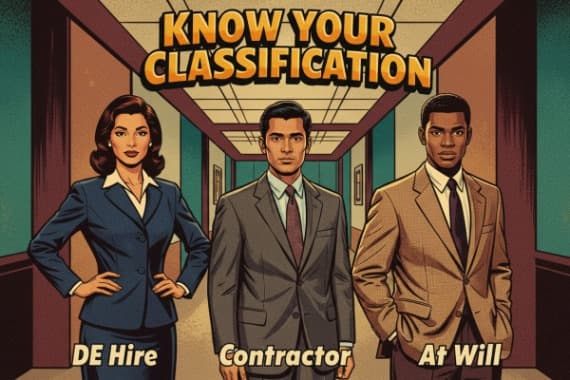
If this helped, the companion pieces on reading a separation agreement and understanding your worker classification go even deeper into protecting yourself after a termination.