How a Small Service Business Wins Its First Federal Subcontract

Most people think federal work starts by bidding against giants. It usually starts with a large contractor who has a legal obligation to find somebody like you and cannot locate anybody qualified.
Most small firms enter federal work as a subcontractor rather than a prime. Large contractors above a dollar threshold are required to submit small business subcontracting plans with percentage goals, report against them, and make good faith efforts to meet them. Your job is to be findable, qualified and easy to say yes to.
The part almost nobody explains
Picture the wrong version first, because it is the one that stops most people.
You imagine federal contracting as a public arena where your two truck operation bids against a company with a proposal department, loses, and repeats that until it gives up. That version is real. It is also not the door most small firms come through.
Here is the door they actually use.
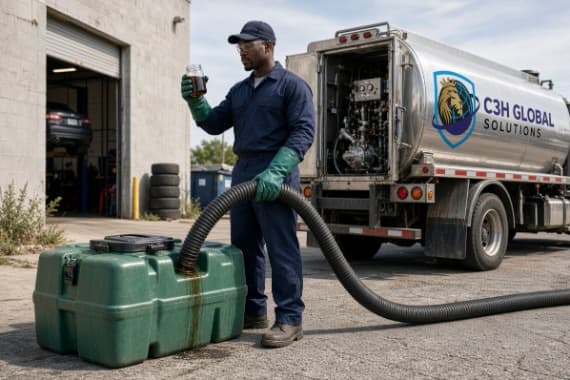
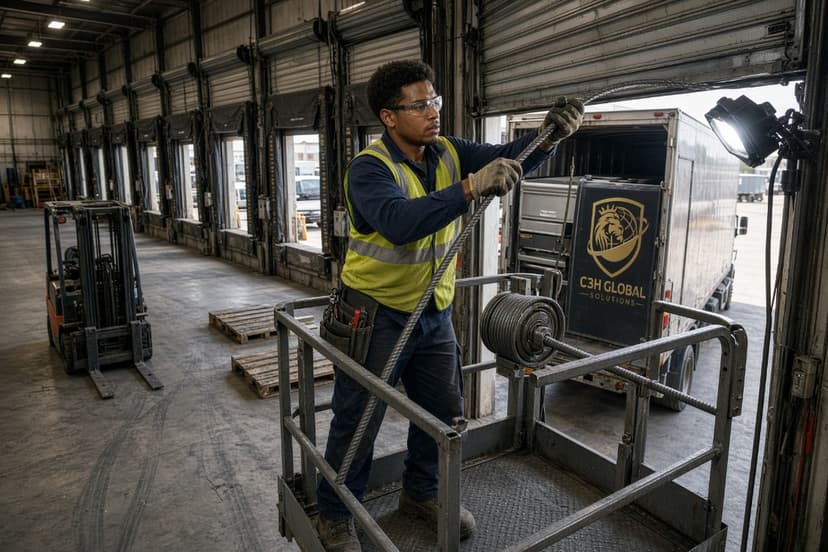
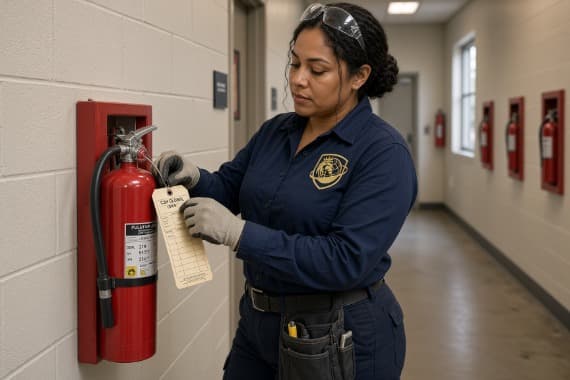
A large contractor wins a facilities support contract at a federal installation. Inside that scope sits work they have no intention of performing themselves. Grounds maintenance. Fire extinguisher service. Waste removal. Dock equipment. Portable sanitation. Somebody has to cover it, and that somebody is a subcontractor.
Now add the part that changes everything. That prime is not choosing whether to use small businesses. They are being measured on it.
Why does the prime need you more than you need them?
This is the mechanism, and it is worth understanding properly rather than believing on faith.
Under the Federal Acquisition Regulation, any contractor receiving a contract above the simplified acquisition threshold has to agree to something specific. Small business concerns, including veteran owned, service disabled veteran owned, HUBZone, small disadvantaged and women owned small businesses, will have the maximum practicable opportunity to participate in performing that contract.
Above a higher dollar threshold, it goes further. Large primes must submit a small business subcontracting plan containing separate percentage goals for each of those categories, and they report performance against those goals through the federal reporting system. The regulation also provides for liquidated damages where a contractor fails to make a good faith effort to meet them.
Read that again with your own business in mind. A prime who cannot find qualified small firms in a category does not simply skip it. They carry a documented shortfall into a report that somebody reviews.
Small business participation is not a courtesy that primes extend when they feel generous. It is a commitment they signed, with numbers attached and reporting behind it.
Two practical notes. The dollar thresholds triggering a subcontracting plan are adjusted periodically for inflation, so check the current figures in FAR 19.702 rather than trusting any number you read in an article, including this one. And small businesses holding prime contracts are not required to have subcontracting plans themselves, which matters later when you are the one growing.
Two doors, and only one of them is crowded
| Prime contractor | Subcontractor | |
|---|---|---|
| Who you sell to | A federal agency | A large contractor who already won the work |
| Registration | Full SAM registration required | Unique Entity ID may be enough to start |
| Competition | Open, often against firms with proposal teams | A prime searching for qualified small firms |
| What wins it | The best compliant proposal | Being findable, qualified and easy to add |
| Typical first award | Small set aside contracts | One line of a larger scope |
| Realistic timeline | Longer, with a proposal capability required | Shorter, driven by relationships |
| What it builds | Prime past performance | Federal past performance and a prime relationship |
Both doors lead to the same building. The second one has a shorter queue and somebody standing in it who wants you to walk through.
You may not need to register the way you think
Here is the detail that saves people months, and almost nobody mentions it.
SAM.gov states plainly that a registration is what allows an entity to bid directly on government contracts and apply for federal assistance. It also states that if you only conduct certain types of transactions, such as reporting as a sub awardee, you may not need to complete a full registration. You may only need a Unique Entity ID.
That distinction matters enormously if your route into federal work is subcontracting rather than priming.
It does not mean you should skip registration entirely. A full SAM registration makes you visible, produces a CAGE code, and is required the day you want to bid directly. What it means is simpler. A partially complete SAM profile is not a reason to delay a conversation with a prime, and the paperwork gate on the subcontracting path is lower than the folklore suggests.
Registration is free, it is renewed every 365 days to stay active, and a Unique Entity ID is assigned during the process. If somebody offers to do it for you for a fee, understand that you are paying for convenience rather than access.
The five things that must exist on paper
Before a prime can put you on a team, five things need to be true and provable. None of them require you to win anything first.
01
A real business entity
An LLC or corporation, formed in your state, with the EIN that follows it. Not a sole proprietorship operating under your own name, because the entity is what appears on every downstream document.
This is also the first thing a prime's compliance team looks at, and it takes an afternoon.
02
A Unique Entity ID, and usually a SAM registration
A Unique Entity ID identifies your organization in the federal system. A full registration adds the ability to bid directly and produces a CAGE code once validated.
Do the full registration if you can. Start conversations before it finishes if you must, because subcontracting does not require you to have completed it.
03
Your NAICS codes and your size standard
Your NAICS codes describe what you sell. Your size standard, set by the SBA on an industry by industry basis, determines whether you count as small within each of those codes.
Get this right early. It determines which set of goals you can be counted toward on a prime's subcontracting plan, and being counted is the entire point of the exercise.
04
A capability statement
One page. Not a brochure, not a deck.
What you do, stated in the buyer's language rather than yours. The NAICS codes you operate under. Your differentiators, meaning what you actually do better rather than a list of adjectives. Your past performance. And your company data block: entity name, UEI, CAGE code if you have one, socioeconomic status, point of contact.
That last block is the part people leave off, and it is the part a small business liaison officer needs in order to do anything with you.
05
Past performance you can point to
The intimidating one, and the most misunderstood.
Past performance does not mean prior federal contracts. It means evidence that you have done this work, for real customers, reliably, and that somebody will say so. Two years of quarterly service records across a dozen commercial buildings is past performance. A written reference from a site superintendent confirming you serviced on schedule for eight months is past performance.
Every one of the nine businesses in our series produces this as a byproduct of operating well. You are not building a federal qualification. You are keeping records you should be keeping anyway.
Where do primes actually look for you?
Four places, in roughly the order they matter.
The SBA's Dynamic Small Business Search. SAM.gov points primes toward the DSBS specifically as the tool for identifying potential small business contractors. If you are not in there, you are not in the place the search happens.
SAM.gov itself. Registered entities are searchable, with their NAICS codes and socioeconomic status attached.
The small business liaison officer. Large primes with subcontracting plans typically have somebody whose job includes finding and reporting small business participation. That person is not gatekeeping. They are looking, and often struggling to find qualified firms in specific categories. Finding out who holds that role at three primes working in your region is an afternoon of work with an outsized payoff.
Industry days and matchmaking events. Agencies and primes run these specifically so small firms can meet them. They are unglamorous, sometimes poorly attended, and the ratio of decision makers to attendees is far better than at any conference you would pay to attend.
The conversation, and what to send
When you find the right person, the approach is short and specific.
Send a two paragraph email and attach the one page capability statement. Say what you do, name the NAICS codes, state where you can perform, and name the contract or the installation you believe they hold work at. Then ask one question: who handles subcontracting for that scope.
What not to do, in order of how badly it lands. A general introduction with no scope goes nowhere. A twelve page company overview goes unread. And asking them to explain federal contracting to you tells them you are not ready, because their time is not free.
What makes you easy to say yes to is narrowness. A prime does not need a firm that does everything. They need somebody who covers one line of a scope, holds the right insurance, and will not create a problem. Be that, clearly, in writing.
How long does this actually take?
Honest answer, and the one most content on this subject avoids.
Georgia Tech's APEX Accelerator tells its own clients that securing a first government contract takes twelve to eighteen months on average. Some do it sooner, and the outcome depends on the time and resources you invest.
Plan for that, because it changes what a sensible strategy looks like.
Federal work becomes something you build toward while running a commercial business rather than instead of one. Registrations should be underway long before you need them. And the relationship building starts a year before the award you are hoping for.
The firms that get there are rarely the most impressive ones. They are the ones who registered early, stayed findable, kept clean records, and were still there when a prime needed exactly their scope covered.
The free help almost nobody uses
There is a federally funded office near you whose entire job is helping small businesses win government contracts, and it costs nothing.
APEX Accelerators, formerly known as Procurement Technical Assistance Centers, are a nationwide network funded through the Department of Defense with state and local matching. SAM.gov itself describes them as an official government contracting assistance resource for small business and points people toward them for free help getting started.
Their own description of the services is plain enough. Assess whether your business is ready. Assist with SAM and DSBS registration and other vendor databases. Advise on whether you qualify for certifications such as small disadvantaged business, 8(a) or HUBZone. Identify government customers, review bids before submission, and advise specifically on teaming and subcontracting relationships.
At no cost.
If you take one action from this article, make it finding your local APEX Accelerator and booking a counseling session. It is the single highest value free resource in this space and most small business owners have never heard of it.
What changes once you are in
Getting the first subcontract is the hard part. Here is what it buys you.
Past performance that counts in federal language. After a completed subcontract you can describe federal experience specifically, which changes how the next prime reads your capability statement.
A relationship with a scope rather than a company. Primes recompete contracts. Scopes persist. A subcontractor who performed well on a facilities contract is the obvious call when the same prime, or a competitor, bids the follow on.
Reference calls that carry weight. A program manager at a large contractor confirming you performed is a different class of reference from a commercial customer.
A realistic path to priming. Small businesses holding prime contracts are not themselves required to have subcontracting plans, and set aside opportunities exist specifically for small firms. Priming is a legitimate destination. It is just rarely the entrance.
Where C3H Global fits
We are on both sides of this arrangement, which is unusual and is the reason this article exists.
C3H Global Solutions is a veteran owned management consulting and program support firm working as both a prime and a subcontractor across facilities support, logistics, security, training and program support. We also run a marketplace connecting businesses, recruiters and service providers.
If you are a small firm heading toward federal work, the sequencing is where people lose months. Entity before registration. EIN before banking. NAICS and size standard settled before the capability statement, because the capability statement is built on them. Records structured from your first commercial job rather than reconstructed later, because that is what becomes past performance. We do this work for clients, and the order matters more than the effort.
If you are a prime looking to cover scope, we hold lanes across facilities, logistics, security, training and program support, and we team. If you have a requirement and a gap, that is a conversation worth having.
And if the constraint is people rather than paperwork, which it eventually is for everybody, the marketplace exists for exactly that.
Start at https://www.c3hglobal.com/ and choose Recruiter to hire, Service Provider to list what you do, or C3H Explorer to look around. For registration sequencing, capability statement development or teaming, email help@c3hglobal.com.
Frequently asked questions
Do I need SAM registration to be a federal subcontractor?
Not necessarily. SAM.gov states that registration is what allows an entity to bid directly on contracts and apply for federal assistance, and that entities conducting only certain transactions, such as reporting as a sub awardee, may need only a Unique Entity ID. Complete the full registration anyway if you can, since it makes you searchable and produces a CAGE code.
Why would a large contractor subcontract to a small business at all?
Because they agreed to. Contractors above the simplified acquisition threshold must agree that small business concerns will have maximum practicable opportunity to participate, and larger contracts require a subcontracting plan with separate percentage goals by category, reported against and subject to liquidated damages for failure to make good faith efforts.
How long does it take to get a first federal contract?
Georgia Tech's APEX Accelerator advises clients that it takes twelve to eighteen months on average, with the outcome depending on the time and resources invested. Treat federal work as something built alongside a commercial business rather than instead of one.
What is a capability statement and what goes in it?
A one page document covering what you do, your NAICS codes, your differentiators, your past performance, and a data block with your entity name, Unique Entity ID, CAGE code, socioeconomic status and point of contact. The data block is the part most people omit and the part a small business liaison officer needs.
Do I need past federal contracts to show past performance?
No. Past performance means documented evidence that you have performed this work reliably for real customers. Commercial service records, written references and completed contracts all count. Keep them from your first job.
Where do I get free help with federal contracting?
APEX Accelerators, formerly PTACs, are a nationwide network funded through the Department of Defense that provides no cost assistance with registration, certifications, bid review and teaming. SAM.gov identifies them as an official government contracting assistance resource for small business.
Can a one person service business really do federal work?
Yes, usually as a subcontractor covering one line of a larger scope. What matters is the entity, the registration, adequate insurance, the right NAICS codes and documented past performance, rather than headcount.
Sources
- Acquisition.gov, FAR Subpart 19.7, The Small Business Subcontracting Program: https://www.acquisition.gov/far/subpart-19.7
- eCFR, 48 CFR 19.702, Statutory requirements: https://www.ecfr.gov/current/title-48/chapter-1/subchapter-D/part-19/subpart-19.7/section-19.702
- SAM.gov, Entity Registration: https://sam.gov/entity-registration
- SAM.gov, Entity Information: https://sam.gov/entity-information
- National APEX Accelerator Alliance, Services: https://www.napex.us/services/
- Georgia Tech APEX Accelerator, Frequently Asked Questions: https://gtapexaccelerator.org/frequently-asked-questions/
Federal acquisition thresholds, registration requirements and program rules change, and several figures in this area are adjusted periodically for inflation. Confirm current requirements at the sources above or with your local APEX Accelerator before acting. This article is educational and is not legal, tax, financial or regulatory advice.
Two things this week, both free
Find your local APEX Accelerator and book a counseling session. Then get your Unique Entity ID at SAM.gov, which costs nothing and takes less time than the folklore suggests.
Those two moves put you further along than most firms who have been talking about federal work for a year.
When you want the sequencing right, or a capability statement that a small business liaison officer can actually act on, that is our work. Email help@c3hglobal.com and tell us what you do and where you operate.
And if you are a prime with a scope gap in facilities, logistics, security, training or program support, the same address reaches us.
Nobody wins federal work by being the biggest firm in the room. They win it by being the findable one who was ready when somebody needed exactly their scope covered.