How to Prepare Your References Before the Employer Calls

Call your references before you list them. Then give them everything they need to remember you clearly, because after four years, most of the details have faded.
To prepare your references, ask permission first, then send each one the job description, your title and dates, and two or three projects you worked on together. Tell them which topics stay off limits, warn them when a call is coming, and thank them afterward. A prepared reference gives specific examples instead of vague praise.
- Pick references who saw your work recently and up close, not the most impressive title you know.
- Always ask first. A surprised reference is a hesitant reference.
- Send a short reference brief so they can give examples, not adjectives.
- Tell them it's fine to say "I can only speak to their work" if questions get personal.
- You can ask an employer to wait until after an offer before calling your current boss.
- Thank every reference, and tell them how it turned out.
Why should you prepare your references?
Think about how much you prepare for an interview. You research the company, rehearse your answers, and decide how to explain why you're leaving. Then you hand a stranger a list of names and phone numbers and hope for the best.
That's backwards, because by the time an employer calls your references, you're usually close to an offer. An employment attorney made this point in a recent video: most people tell a reference something like "hey, they might call you" and leave it there. If you worked together years ago, that person may not remember which projects you led, what your title was, or why you were good at it. A reference who has to dig for every detail sounds unsure, and to a hiring manager, unsure sounds like a warning.
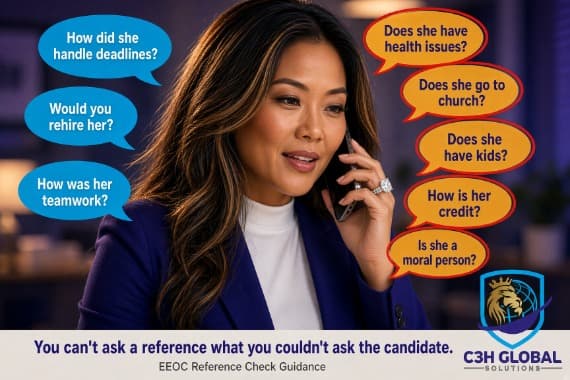
The same video described a reference call that went sideways. According to a Reddit post written by the reference, the employer asked about the applicant's health, disability, church attendance, family, credit, and whether she was "a moral person." The reference kept answering with the only thing she could speak to: the quality of the applicant's work. Most people couldn't think that fast on their feet. Once your references are prepared, they won't need to.
How do you prepare your references, step by step?
Pick the right three people
The ideal reference watched you up close, recently, and can speak to the skills this particular job needs. A former supervisor is usually the strongest choice, followed by a peer who worked beside you and a client or customer who depended on your work. Choose different references for different roles if you can. The person who can vouch for your project management may not be the one who saw your customer service.
Field note: Keep a simple reference roster: name, current title and company, best phone and email, preferred time to be called, and the date you last used them. If someone has changed jobs since you worked together, include both their old and new titles so the employer can follow the connection.
Another field note: Skip friends and family unless the employer specifically asks for a personal reference. Your cousin's glowing review carries about as much weight as a five star rating you wrote for yourself.
Ask permission, and give them an easy way out
Never list someone without asking. People caught off guard tend to pause, hedge, and search their memory out loud, and the caller hears every second of it. Give people a graceful exit, because a reluctant reference is worse than none.
Send a reference brief
Hand over your reference list only when an employer asks, usually near the end of the process. Every unnecessary call wears out a little goodwill, and you'll want these people for years.
This is the step almost everyone skips, and it makes the biggest difference. Send a short email with everything your reference needs to give specific, useful answers. Keep it to one screen so they'll actually read it.
Field note: Remind them of facts, never script their opinion. "You might mention the scheduling system I rebuilt" helps. "Please say I'm the best analyst you ever managed" puts them in an awkward spot, and it sounds rehearsed on the call.
Tell them what's off limits
A reference should stick to what they personally observed. Under EEOC guidance on disability questions, an employer may not ask a third party, including a former employer, anything it couldn't ask you directly before an offer. Your reference doesn't need to know that rule. They just need permission to stay in their lane.
Field note: Well meaning references overshare when they're trying to help. Giving them a ready made line protects both of you.
Protect your current job
If you're employed and your boss doesn't know you're looking, say so. EEOC guidance notes that an applicant may ask that a current employer not be contacted until a conditional job offer is made. Most employers understand, and asking shows you handle sensitive matters carefully.
Send a heads up when the call is coming
When an employer tells you they're checking references, text each reference that day. Spam calls have trained all of us to ignore unknown numbers, so a two line message is the difference between a glowing review and a voicemail nobody returns.
Close the loop and thank them
Whatever happens, tell your references the outcome. Nobody enjoys being left on read, least of all the person who just vouched for you. They want to know how it ended, and a reference who feels appreciated will say yes again next time.
Your references are ready. Now find the role worth calling them about.
Browse open positions, including remote roles, on the C3H Global job board. To explore jobs and services in one place, choose Sign up and select the C3H Explorer role.
Reference prep checklist
Screenshot this list. Future you, three interviews deep and juggling two recruiters, will be grateful.
- Three references chosen for this specific role
- Permission asked and confirmed
- Current contact details and best call times verified
- Reference brief sent with the job description
- Off limits topics mentioned
- Current employer protected until an offer
- Heads up text sent when calls begin
- Thank you and outcome shared
- Reference roster updated with the date used
Which references carry the most weight?
| Reference type | Best for showing | Watch out for |
|---|---|---|
| Former supervisor | Performance, reliability, growth, and rehire eligibility | Company policies that limit them to dates and title |
| Peer or teammate | Collaboration, day to day work habits, and problem solving | Less weight on performance than a manager carries |
| Client or customer | Results, communication, and service quality | Confidentiality around the work you did for them |
| Professor or program leader | Work ethic and skills, especially early in a career | Less relevant once you have work experience |
| Volunteer coordinator | Leadership, dependability, and initiative | Make sure the work relates to the job |
| Friend or relative | Character, only when a personal reference is requested | Little weight for professional roles |
What should your references never say?
A great reference is specific, honest, and limited to what they saw. These are the habits that turn a helpful call into a problem:
- Guesses about your private life, including health, family plans, or finances.
- Speculation about anything they didn't witness themselves.
- Details about why you left that you haven't agreed on together. Make sure your stories match.
- Salary numbers unless you've asked them to confirm one. Let the conversation about pay happen with you directly.
- Exaggerations. An inflated claim that falls apart under a follow up question costs more credibility than modest honesty.
- Comparisons to coworkers by name. "She was better than everyone else on the team" raises more questions than it answers.
What if you don't have strong references?
Most people have better options than they think. Early in a career, a professor, internship supervisor, or volunteer coordinator can speak to how you work. If you left a job on bad terms with your manager, look for another leader who saw your work, such as a manager on a partner team, a project lead, or a client. If you freelanced, past clients are references too.
And if you've been out of the workforce for a while, think about anyone who has seen you deliver recently: a board you served on, a community project, or a short contract. Recent and relevant usually beats senior and stale.
Can a former employer give you a bad reference?
The attorney in the video says yes: federal law doesn't stop a former employer from sharing negative information, as long as it's true. Many employers choose to confirm only dates and job titles anyway, because inaccurate statements can lead to defamation claims. Rules vary by state, so if you're worried, ask your former employer's HR department what they confirm when someone calls. Then make sure the references you choose can speak to the parts of your work that went well.
What if a screening company calls your references?
Some employers hire a background screening company to make reference calls. According to the Federal Trade Commission, when a report is built from interviews about your character, reputation, or lifestyle, it counts as an investigative consumer report. The employer has to tell you in writing that it may request one, and you have the right to ask for more information about the nature and scope of the report. If you ever receive a disclosure form like this, read it before signing.
Interviewing soon? Our guide to illegal interview questions and how to answer them covers what employers can and can't ask you directly.
Who and what does this article cover?
- Professional reference: Someone who worked with you and can describe your performance to a prospective employer.
- Reference brief: A short email giving a reference the job description, your shared history, and projects worth mentioning.
- Conditional job offer: An offer made before final checks, which is often when employers contact a current boss.
- EEOC: The U.S. Equal Employment Opportunity Commission, which enforces federal laws against job discrimination.
- Investigative consumer report: A background report based on interviews about your character or reputation, which requires written notice to you.
- Federal Trade Commission (FTC): The agency that enforces the Fair Credit Reporting Act, including rules for background reports.
- Defamation: A false statement that damages someone's reputation, the main legal risk for employers giving references.
Questions job seekers ask about references
How many references should I have ready?
Three is a common request, but follow what the employer asks for. Keep a fourth person in reserve in case someone can't be reached.
Should I tell my references about the job I'm applying for?
Yes. Send the job description and a few projects you worked on together, so they can connect your experience to what the employer needs.
Can I use a coworker instead of a manager as a reference?
Yes, especially if a manager isn't available. A peer can speak to your teamwork and daily habits, though most employers also want at least one person who supervised you.
Can I ask an employer not to contact my current boss?
Yes. EEOC guidance notes that an applicant may ask that a current employer not be contacted until a conditional job offer is made. Offer other references in the meantime.
What should a reference do if they're asked personal questions?
They can say they're only able to speak to your work, then return to what they observed. They should never guess about your health, family, religion, or finances.
Where can I find jobs to apply for?
Browse current openings, including remote roles, on the C3H Global job board, then choose Sign up and select the C3H Explorer role.
Find your next role
Browse openings on the C3H Global job board and sign up as a C3H Explorer to explore jobs and services in one place.
Keep the checklist handy
Bookmark this page so the scripts and the reference brief are ready the next time a recruiter asks for names.
Hiring instead of job hunting?
Read our guide to reference check questions employers can and can't ask, then post your opening with the Recruiter role.
This article is general information, not legal advice. Rules about what former employers may say vary by state, and the attorney's comments are described as her perspective. Federal discrimination laws generally apply to employers with 15 or more employees. For questions about a specific situation, speak with an employment attorney licensed in your state.
Sources
- U.S. Equal Employment Opportunity Commission, "Enforcement Guidance: Preemployment Disability Related Questions and Medical Examinations." eeoc.gov
- Federal Trade Commission, "Using Consumer Reports: What Employers Need to Know." ftc.gov
- Employment attorney commentary, "These Job Interview Questions Could Get Employers in Trouble," YouTube. youtube.com