Texas Roadhouse, Two Viral Stories, and What Trust Really Costs
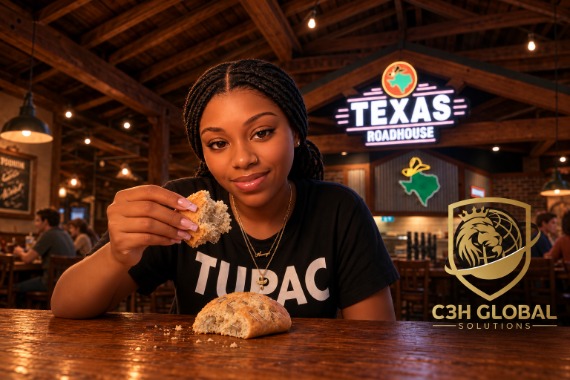
In August 2026, a viral screenshot claimed white servers at Texas Roadhouse and Logan's Roadhouse were tampering with Black diners' food. No news outlet or fact checker has found evidence that confirms or disproves it. A year earlier, a family at the Walpole, Massachusetts location found staples baked into a child's roll, an incident documented on video.
The Whole Point in Six Lines
- The Walpole staples incident in August 2025 is documented: a six year old bit into a roll with staples baked inside, and two managers gave the family conflicting answers.
- The August 2026 post describing a 400,000 member group of servers tampering with Black diners' food has been neither proven nor disproven.
- Texas Roadhouse calls the post a hoax and hired the forensics firm it says cleared it. That firm's findings have not been made public.
- The company's "Manager in the Window" check is a visual quality check, and it cannot detect saliva, handling contamination, or objects inside food.
- People believed the post quickly because trust was already thin, and corporate statements could not rebuild it overnight.
- A small service business cannot outspend a viral claim, so it has to build visible proof before one arrives.
Something hard was in her roll. A six year old told her family that much in August 2025, at the Texas Roadhouse in Walpole, Massachusetts. When they pulled the bread apart, they found staples baked inside.
A year later, a different story moved through social media much faster. A screenshot claimed that white servers at Texas Roadhouse and Logan's Roadhouse belonged to a huge secret group that tampered with food served to Black customers. Nobody has proven that it happened, and nobody has proven that it did not.
One story is documented and the other is not. For many Black customers, both still hit the same nerve. Can the people preparing your food be trusted, and will anyone tell you the truth if something goes wrong? A national chain can absorb doubts like that. For a small Black owned service business, the same doubts can decide whether the phone rings at all.
Below, we take both moments apart using only what the public record supports. Then we turn to the lessons, and to the trust file every service provider can start building this week.
What happened at the Walpole Texas Roadhouse in August 2025?
The child's older sister posted the experience on TikTok, where one video passed 3.1 million views. The six year old bit into a dinner roll and said something hard was inside. The family inspected it and found several unused staples baked into the bread. Another diner at the restaurant that night posted her own video supporting the family's account.
The first manager apologized, offered to cover the family's full meal, and suggested the staples may have gotten into the dough when a bag was opened in the kitchen. When the check arrived, though, only one meal had been taken off.
A second manager then came to the table and told the family the restaurant had no staples on the premises. The family said they could see staples on paperwork at a nearby table and on a bulletin board. This manager refused to cover the full meal, saying there was no injury, and left only the child's meal off the bill. Afterward, several people who said they were current or former employees posted that staples are common in the restaurant's office areas.
The mother took the child to an emergency room for an X ray to confirm she had not swallowed any staples. The family contacted health officials, and a health department visit followed, according to Boston 25 News reporting cited by The Daily Dot. The family also said they planned to file a police report.
Texas Roadhouse said it was aware of the situation and investigating, that the health department found no signs of physical contamination in the restaurant, including the bread and kitchen areas, and that it had been in contact with the guests. The family said the company offered a $70 gift card, which they refused.
The staples were the first failure. The response was the second, and the response is what went viral. Two managers gave two answers, and one of those answers denied something the family could see with their own eyes. The corporate statement then pointed to a clean inspection while the family was holding the staples. Each step may have looked reasonable to the person taking it. Together, they told a family that their experience counted for less than the restaurant's record.
What did the August 2026 viral post actually claim?
The claim started with a screenshot of a Facebook post that appeared in one of several groups using the name "White and proud," all sharing the same profile image. The post was made by an account displaying the name Nancy Smith. It warned Black diners to stay away from Texas Roadhouse and Logan's Roadhouse, and it described a secret Facebook group of more than 400,000 members. According to the post, servers in that group talked about licking their fingers, touching food, and spitting on rolls served to Black customers. The post itself has since been deleted, and BroBible reported that the account changed its name and profile picture. The screenshot spread widely on social media, including through a TikTok video that read the post aloud, and calls for a boycott followed.
The White and proud group where the post appeared has roughly 62,000 to 63,000 members, according to separate checks by BroBible and Snopes. BroBible reported that its membership appears to include bots and Black users mocking the group. Snopes found that the larger group's only listed admin was a page called Blacks Of Egypt, and that the person behind it described White and proud as satirical. Outlets read the post's 400,000 figure differently. BroBible treated it as a claim about the White and proud group, which its size does not match, while Snopes read it as describing a separate secret group. No news outlet or fact checker has found evidence that a 400,000 member group exists or that it does not exist.
Texas Roadhouse first responded on TikTok on August 23, calling the accusation completely unfounded and saying it was investigating. Two days later, it told the Houston Chronicle that its investigation and outside sources pointed to an online hoax. On August 26, its chief communications officer told Restaurant Business that the company had found no evidence of tampering or of the 400,000 member group, and that it had seen no impact on business. The next day, the company posted on X that its online forensics firm had confirmed the rumor was baseless.
Snopes reported finding no verifiable evidence that either confirms or debunks the claim, called it unfounded, and left it unrated. No restaurant location, city, or employee was named in the post. Some users who first spread the screenshot later retracted it and called it a hoax. Health departments had not announced related inspections as of late August, and Logan's Roadhouse had not issued a public statement at the time of reporting.
Asked about food safety, Texas Roadhouse told Snopes that its restaurants use a "Manager in the Window" system, in which all prepared food is checked for quality at the expo window before going to the table. A visual quality check cannot detect saliva, contamination from handling, or objects baked inside food, so the procedure does not answer the allegation it was offered to rebut. The company has not explained how every plate is checked during peak hours, and no outside party has verified that it is. The Walpole roll with staples baked into it went through the same system and reached a six year old's plate.
A screenshot with no name, no city, and no date moved faster than every statement that followed it. The company answered with strong adjectives, an investigation it controls, and a procedure that cannot detect what was alleged. Whatever the truth turns out to be, that kind of answer cannot settle the question for a customer who already had doubts.
How do the two stories compare side by side?
| Walpole, August 2025 | Viral post, August 2026 | |
|---|---|---|
| What was claimed | Staples baked into a child's dinner roll | Servers in a 400,000 member group tampering with Black diners' food |
| Public evidence | Video and photos of the staples, plus a second diner's account | A screenshot of a post that has since been deleted |
| Location named | Walpole, Massachusetts | None |
| Company response | Investigating, cited a health inspection finding no contamination, offered a gift card | Called it a hoax, hired a forensics firm, described its window check |
| Outside review | Health department visit, as reported by Boston 25 News | Snopes found no verifiable evidence either way |
| Where it stands | Documented incident with conflicting manager accounts | Neither proven nor disproven, and the forensics findings are unpublished |
Who is telling the story, and what do they have at stake?
Every account in this story comes from someone with an interest. Texas Roadhouse's statements are corporate communications from a company protecting a national brand. It hired the forensics firm it says cleared it, and that firm's findings have not been released. At Walpole, a manager's claim that the restaurant had no staples was contradicted by what the family saw and by people who said they were current and former employees.
On the other side, the August 2026 post came from a deleted account no one has identified, and the people who spread it had attention to gain. A careful reader weighs each claim against who is making it and what evidence they have shown.
What remains open?
The public record does not settle what happened, so several explanations remain possible:
- The post was fabricated. The account was deleted, no group has been found, and some people who spread the post later called it a hoax.
- The post described something real that has not been found. A secret group would, by design, be hard to locate, and the absence of evidence is not proof that it never existed.
- The company's response is damage control. Texas Roadhouse is protecting a national brand, hired the firm it says cleared it, and has not released that firm's findings.
- The company's response is accurate. Its investigation may have found exactly what it says, and an unreleased report is not proof of a hidden one.
- Information has been withheld or minimized. At Walpole, a manager's claim that the restaurant had no staples was contradicted by the family and by people who said they were current and former employees, which shows that at least one location's account of a customer complaint did not hold up.
- More than one of these is true at once. A post can be fabricated while a company also manages the story in its own favor.
Until the forensics findings are released or new evidence surfaces, each of these deserves weight in proportion to what supports it.
Why did so many people believe the post so quickly?
Many Black customers carry a question that other diners rarely think about: will I be served the same way as the table next to me? A post that names that fear does not need much evidence to feel true, because it describes something people already watch for. That is the quiet weight in this story, and it does not lift when a company issues a statement.
The recent record did not help. Walpole showed staples reaching a child's plate and a response that contradicted itself at the table. When the next accusation arrived, the company's word was competing with what people had already seen. Words like "unfounded" and "abhorrent" read as public relations to anyone who already doubted, because that is exactly what a company would say whether the claim was true or false.
Believing a post too quickly carries real risk. So does dismissing the reasons people were ready to believe it. Both can be true, and a business that wants trust has to deal with the second one.
If you run a small Black owned service business, read that again with your own name in it. The same speed applies to you, and you do not have a communications chief or a forensics firm. One angry review with a screenshot can travel further than anything you post that month. The difference is that a small business can do something a chain struggles with: make its proof visible before anyone asks for it.
What should a small service business take from both stories?
The first answer is the one people remember
At Walpole, one manager promised to cover the meal and a second manager reversed it. The reversal became the story. A mistake is easier to forgive than an answer that keeps changing.
Decide in advance who on your team can promise a refund, a redo, or a credit, and make sure every person gives the same answer before anyone makes a promise.
Never deny what the customer can see
Telling a family there are no staples in the building while staples sit on a nearby table turns a kitchen accident into a credibility problem. Once a customer catches one denial, they stop believing the rest.
When a customer shows you evidence, acknowledge it first and investigate second. Saying "I can see that, and I'm going to find out how it happened" costs you nothing.
A favorable finding does not cancel the customer's evidence
The company pointed to an inspection that found no contamination while the family was holding the staples. Both facts can be true at once, and leading with the one that favors you reads as dismissal.
If a review or check favors you, share it alongside what you are still looking into, never as the final word on someone else's experience.
Describe safeguards that match the actual fear
A window check for food quality cannot detect tampering, so citing it did not reassure anyone worried about tampering. Customers can tell when a process answers a different question from the one they asked.
Name the specific risk your customers worry about and the specific step that addresses it. For a cleaning service, that may be background checks and how keys are stored. For a bookkeeper, it may be who can access client accounts and how that access ends.
Speak to the person before the brand
A six year old ended up in an emergency room for an X ray. Any response that does not start with that child's safety is answering the wrong question.
Make the first sentence of every complaint response about the person: their safety, their time, their money. Your process and your record come after.
Silence sends a message too
Logan's Roadhouse was named in the same post and had issued no public statement at the time of reporting. Customers fill silence with their own conclusions.
Keep a short holding statement ready so you can say something true within hours, even when you do not have every answer yet.
Most of this belongs somewhere customers already look. A C3H Global service listing has room for your full description, your pricing, a FAQ, and images of your work, which is exactly where a cautious customer checks you before reaching out. If you offer a service, start at www.c3hglobal.com/services, choose Sign up, and select the Service Provider role.
If you are still setting up the business itself, we help with the foundation too, including your EIN, business banking, entity structure, equipment sourcing, and the references you need to start strong.
How do you build a trust file before you need one?
A trust file is the set of documents and habits that let a customer check you before they pay, and let you answer a complaint with facts instead of adjectives. You can start one in an afternoon and keep adding to it as your business grows.
Write your terms in plain language
State what the service includes, what it costs, how long it takes, how many revisions are covered, and what happens if something goes wrong. Put these terms on your listing and in every quote, so nobody discovers a limitation for the first time when they ask for help.
Show how the work gets done
Describe your process from first contact to delivery: what you need from the customer, who does the work, who checks it, and when it arrives. Back it up with proof that holds up under a question, such as real reviews, work samples shared with permission, and credentials that relate to the service.
Publish a complaint path
Tell customers exactly where to send a concern, who will read it, and how quickly they will hear back. A complaint path that is easy to find tells customers you expect to be accountable, and that alone can keep a frustrated customer talking to you instead of posting about you.
Keep an evidence locker
Save dated photos of finished work, signed scopes, invoices, and message threads in one place. These records protect your customer as much as they protect you, and if a claim ever appears, you can show what happened instead of asking people to take your word for it.
Write your holding statement now
Draft three sentences you can post or send within hours of a public complaint: that you have seen it, what you are checking, and when you will update. Adjust the details when the time comes, but never start from a blank page under pressure.
We have seen the post about our service and we take it seriously. We are reviewing our records for the job described and will share what we find by Friday. If you were affected, please contact us directly at [your email] so we can speak with you.
Agree on one voice
Choose who responds to complaints and who can approve a remedy, and route every other team member to that person. With one clear voice, your customers never hear two managers giving two different answers.
Once your trust file exists, make sure your listing reflects it. Our Guides and Resources library has more practical walkthroughs for service providers building their first customer base.
Who and what does this article cover?
- Texas Roadhouse: A publicly traded casual dining chain headquartered in Louisville, Kentucky, named in the August 2026 viral post.
- Logan's Roadhouse: A steakhouse chain also named in the post, which had not issued a public statement at the time of reporting.
- Walpole, Massachusetts location: The Texas Roadhouse where a family found staples baked into a child's roll in August 2025.
- White and proud groups: Several Facebook groups sharing one name and profile image, one of which hosted the viral post and whose admin described it as satirical.
- Manager in the Window: Texas Roadhouse's described practice of checking prepared food for quality at the expo window before it goes to the table.
- Third party online forensics firm: The outside firm Texas Roadhouse hired to trace the post's source and motive, whose findings have not been published.
- Snopes: A fact checking site that found no verifiable evidence confirming or debunking the tampering claim.
- Health department inspection: The official visit to the Walpole restaurant after the staples incident, which the company says found no signs of contamination.
Questions readers ask about the Texas Roadhouse claims
Is the Texas Roadhouse food tampering story true?
No outlet or fact checker has verified it or disproved it. Texas Roadhouse says its own investigation and an outside forensics firm show the post was a hoax, but that firm's findings have not been published. Snopes found no verifiable evidence in either direction and called the claim unfounded.
Did a 400,000 member Facebook group of servers exist?
No news outlet or fact checker has found evidence that the group exists or that it does not exist. The White and proud group where the post appeared has roughly 62,000 to 63,000 members, and outlets disagree on whether the 400,000 figure referred to that group or to a separate secret one.
What happened with the staples at the Walpole Texas Roadhouse?
In August 2025, a six year old bit into a roll with several staples baked inside. Two managers gave the family conflicting answers about covering the meal and about whether staples were on the premises. The child was checked with an X ray, a health department visit followed, and the company said the inspection found no contamination.
Can a manager check at the expo window detect food tampering?
A visual quality check cannot detect saliva, contamination from handling, or objects inside food. The company describes the check as covering all food, but it has not explained how that works during peak hours, and no outside party has verified it.
What should a small business do when a viral post accuses it?
Respond quickly with a short holding statement, address the people affected before defending the business, share records that show what happened, and keep one person responsible for every public answer. If the claim is false and causing financial harm, talk with an attorney before making legal threats in public.
How do I list my service business on C3H Global?
Go to www.c3hglobal.com/services, choose Sign up, and select the Service Provider role. Then build your listing with your description, pricing, a FAQ, and images of your work. You can compare plan options on our pricing page.
Three things to do next
- Read your listing on a phone as a stranger would. Check whether someone who has never heard of you can find your price, your process, and where to send a concern within one minute.
- Write your holding statement and complaint path today. Use the sample above as a starting point and save both where everyone on your team can reach them.
- Put your trust file where customers look. Create or update your service listing at www.c3hglobal.com/services and select the Service Provider role when you sign up, so the next customer who wonders whether to trust you finds the answer before they ask.
This article reflects public reporting available as of October 6, 2026. The company described its forensics review as ongoing, and its findings had not been published, so details may change. This is general information, not legal advice. If a public claim about your business is causing financial harm, speak with an attorney licensed in your state.
Sources
- Snopes, "Posts claim Texas Roadhouse servers contaminated Black customers' food. Here's what we know," August 24, 2026. snopes.com
- Restaurant Business, "Texas Roadhouse says post alleging racist practices was a hoax," August 26, 2026. restaurantbusinessonline.com
- Houston Chronicle, "Texas Roadhouse investigates Facebook hoax alleging racist food tampering at restaurants," August 25, 2026. houstonchronicle.com
- BroBible, "Texas Roadhouse Forced To Speak Out After Alleged Worker Claims Servers Tamper With Certain Guests' Food," August 2026. brobible.com
- NewsRadio 1080 KRLD, "Texas Roadhouse calls viral racism claims a hoax," August 28, 2026, including the company's August 27 statement on X. audacy.com
- KTXS, "Viral post alleges Texas Roadhouse mistreated Black customers; company responds," August 24, 2026. ktxs.com
- Hoodline, "Texas Roadhouse Denies Viral Claim Black Diners' Food Was Tampered With," August 25, 2026. hoodline.com
- The Daily Dot, "Family discovers staples inside a Texas Roadhouse roll," August 29, 2025, citing Boston 25 News. dailydot.com